
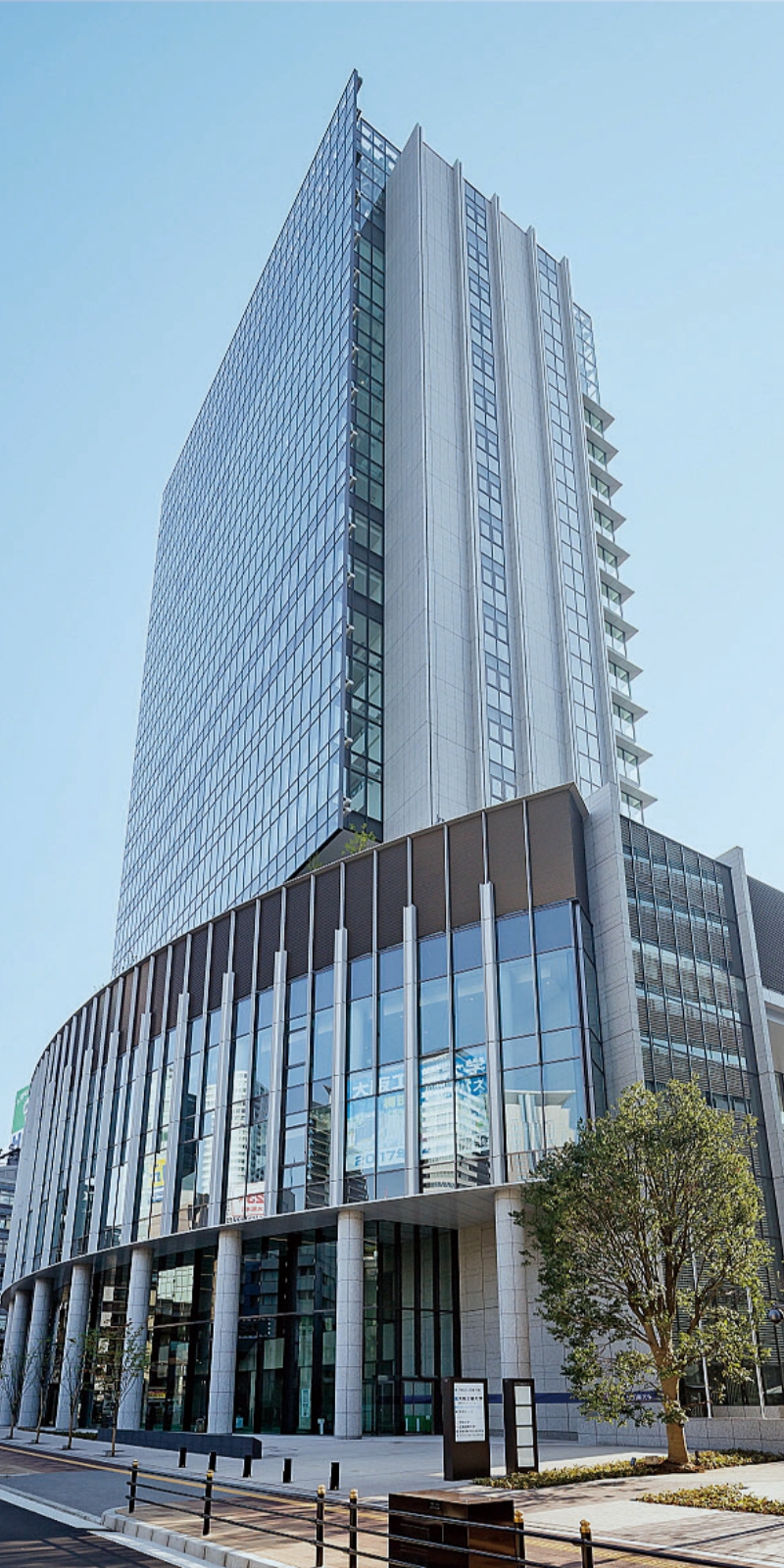




From February 23 to 28, 2026, the Department of Environmental Engineering in the Faculty of Engineering at Osaka Institute of Technology (OIT) conducted an international Project-Based Learning (iPBL) program at the University of Palangka Raya (UPR) in Central Kalimantan, Indonesia. The program brought together five undergraduate students and two graduate teaching assistants from Osaka Institute of Technology, along with six students from the University of Palangka Raya. Through field investigations and group discussions conducted on site, the participants worked collaboratively to address environmental issues.
Program Overview
This program was designed to foster practical problem-solving skills and international communication abilities through collaboration with students from an overseas partner university.
Participants were divided into two mixed teams consisting of students from OIT and the UPR, and engaged in the full process from fieldwork and analysis to discussion and final presentations.
The theme for Group A was “Monitoring Peatland Fires and Assessing Ignition Risk Using GIS and Satellite Imagery,” while Group B worked on “Exploration of Algal Biological Resources for Next-Generation Biofuels.” Through fieldwork in tropical peat swamp forests and surrounding water environments, as well as water sampling, observation, and data organization, the students tackled real-world issues in the field of environmental engineering.
Learning Outcomes and Achievements
During the program, the students took part in hands-on learning activities rooted in the local environment, including surveys in protected forests, sampling in rivers and ponds, and microscopic observations using university facilities.
Students from different academic backgrounds and cultures worked together in English while sharing responsibilities, and on the final day, both groups delivered presentations on their findings.
According to the post-program survey, all evaluation items—overall satisfaction with the project, improvement in communication skills, and willingness to participate in similar programs in the future—received the highest average score of 5.0, indicating a high level of participant satisfaction.
In the open-ended responses, students commented on their increased motivation to improve their English skills and on how they experienced both the challenges and the rewards of international collaboration. The program thus provided a valuable opportunity to develop not only disciplinary expertise but also a broader international perspective.
Looking Ahead
This iPBL program offered students an opportunity not only to deepen their academic learning in the environmental field, but also to develop the ability to think independently, communicate effectively, and collaborate with others while engaging with diverse perspectives.
OIT will continue to promote international educational initiatives in cooperation with its overseas partner institutions, supporting students in taking on new challenges.
Faculty Members in Charge
OIT
• Prof. Naru Takayama (Department of Environmental Engineering)
• A.Prof. Koji Kawamura (Department of Environmental Engineering)
UPR
• Dr. Hendrik Segah
• Dr. Ardianor
-
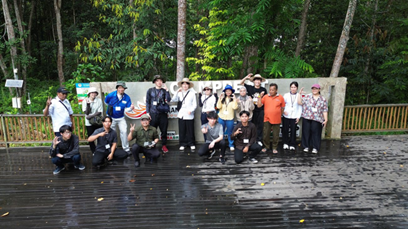
In the protected forest (February 24)
-
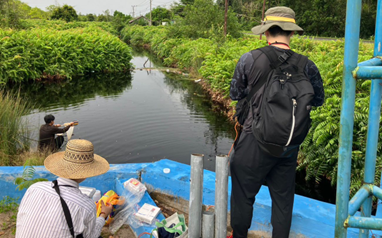
Field survey: water sampling (February 24)
-
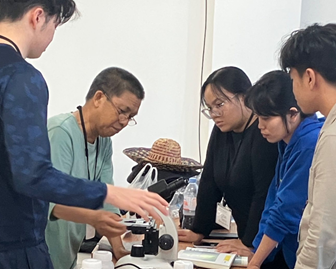
Microscopic observation session (February 25)
-
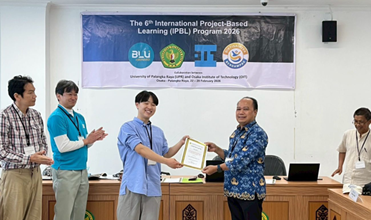
Certificate presentation ceremony (February 25)